Based out of New York, the Chris Hahn Radio show is one of the leading Progressive news programs in the nation.
Here is a link to the interview which starts at minute 52
http://christopherhahn.com/
The official Blog( as silly as that sounds) of Author and Historian Robert Buccellato. Author of the Books Florida Governors Lasting Legacies and Jimmy Carter in Plains a Presidential Hometown
Showing posts with label robert buccellato. Show all posts
Monday, November 23, 2015
New Book Cover for Jimmy Carter in Plains The Presidential Hometown
Friday, November 20, 2015
Robert Buccellato Jimmy Carter In Plains Author Events
Robert Buccellato's Upcoming Events
Date City, State Venue Event
Feb 1, 2016
7:00 PM Atlanta, GA Jimmy Carter Presidential Library Robert Buccellato "Jimmy Carter in Plains, A Presidential Hometown" Lecture/Book Signing Monday, ...
Feb 2, 2016
10:25 AM Fremont, NE Back Porch Writer Author interview with Backporchwriter.com radio blog show
Feb 4, 2016
6:00 PM Ronkonkoma, NEW YORK Christoper Hahn Radio Show author book interview on new book Jimmy Carter in Plains
Feb 13, 2016
3:00 PM Americus, Georgia Bittersweet Author Book signing and presentation TIMES SUBJECT TO CHANGE
Feb 14, 2016
2:00 PM Plains, Georgia Jimmy Carter National Historic Site Book Presentation and Signing at the Plains High School
Lillian Carter A Compassionate life book Review
My book review of this great book by Grant Hayter-Menzies
To call this book masterful would not be an overstatement. Grant Hayter – Menzies has done something near impossible, he has managed to remind a nation about one of its own neglected treasures. “Lillian Carter A compassionate life” starts off with a lovingly written foreword by Former President Jimmy Carter, the subject’s first born son. Many people reading this may instantly get images that this foreword in nothing more than a few quickly written sentences. This is not the case, and showcases President’s deep love for his deceased mother.
Menzies’ writing is nuanced and breezy. His visuals are compelling and revealing. The town of Plains and the backdrop of poverty stricken India are presented with haunting clarity. Lillian Carter is a detailed and fully formed human being in this biography and Menzies’ has managed to display the Carter family with all it’s great strengths and complexities. This was a literary experience that any fan of American History should undertake with great speed, an experience that I didn’t want to end.
-Robert Buccellato
To call this book masterful would not be an overstatement. Grant Hayter – Menzies has done something near impossible, he has managed to remind a nation about one of its own neglected treasures. “Lillian Carter A compassionate life” starts off with a lovingly written foreword by Former President Jimmy Carter, the subject’s first born son. Many people reading this may instantly get images that this foreword in nothing more than a few quickly written sentences. This is not the case, and showcases President’s deep love for his deceased mother.
Menzies’ writing is nuanced and breezy. His visuals are compelling and revealing. The town of Plains and the backdrop of poverty stricken India are presented with haunting clarity. Lillian Carter is a detailed and fully formed human being in this biography and Menzies’ has managed to display the Carter family with all it’s great strengths and complexities. This was a literary experience that any fan of American History should undertake with great speed, an experience that I didn’t want to end.
-Robert Buccellato
Tuesday, November 17, 2015
Jimmy Carter in Plains Book Endorsement by Kevin Mattson
I am very honored to present the book endorsement made by author Kevin Mattson, the author of several exceptional books including "What the heck are you up to Mr President" and "Just Plain Dick."
"This marvelous little book shines light on the truly populist campaign that landed Jimmy Carter in the White House. You can actually SEE the authentic and regular-guy style of Jimmy Carter at work. The images of Carter's small-town background are especially compelling. Political and historical junkies will find this book a great piece of entertainment that doesn't discount the moral and visionary heft that Jimmy Carter brought to Washington, D.C."
-Kevin Mattson, Author of "What the heck are you up to Mr President."
"This marvelous little book shines light on the truly populist campaign that landed Jimmy Carter in the White House. You can actually SEE the authentic and regular-guy style of Jimmy Carter at work. The images of Carter's small-town background are especially compelling. Political and historical junkies will find this book a great piece of entertainment that doesn't discount the moral and visionary heft that Jimmy Carter brought to Washington, D.C."
-Kevin Mattson, Author of "What the heck are you up to Mr President."
Thursday, November 12, 2015
"Jimmy Carter in Plains, A Presidential Hometown" book signing
author Robert Buccellato will be signing books at the Jimmy Carter Presidential library
Lecture/Book Signing
Monday, February 1, 2016 at 7:00pm
Carter Presidential Library & Museum Theater
Free and Open to the Public
Lecture/Book Signing
Monday, February 1, 2016 at 7:00pm
Carter Presidential Library & Museum Theater
Free and Open to the Public
Tuesday, November 10, 2015
Jimmy Carter in Plains Book Endorsement - by Betty Pope
How do you capture a magical time in your life? This book of photographs and descriptions are evidence of Jimmy Carter's hometown and campaign for President of our USA. Your book gives a true feeling of Plains, then and now. People can experience the small town life and "down to earth" people who brought forth a awesome welcome to visitors then , now and forever.
I really enjoyed the revisit to the past! Unforgettable.
- Betty Pope Founding member of the Carter Peanut Brigade
I really enjoyed the revisit to the past! Unforgettable.
- Betty Pope Founding member of the Carter Peanut Brigade
Jimmy Carter in Plains Book Endorsement - by Max J. Skidmore
Visual representations of politics in America are too often ephemeral,
taking the form of campaign literature that quickly vanishes, or news
reports that do not last beyond the headlines. Robert Buccellato, in what
obviously was a labor of love, has produced something different. His
presentation in pictures of the political life of President Carter before
and during his presidency should be welcomed by general readers who are
interested American presidents. Perhaps more important, these pictures
offer unique insights, making this book a contribution to American Studies
and to presidential history.
Max J. Skidmore
Author of After the White House: Former Presidents as Private Citizens
taking the form of campaign literature that quickly vanishes, or news
reports that do not last beyond the headlines. Robert Buccellato, in what
obviously was a labor of love, has produced something different. His
presentation in pictures of the political life of President Carter before
and during his presidency should be welcomed by general readers who are
interested American presidents. Perhaps more important, these pictures
offer unique insights, making this book a contribution to American Studies
and to presidential history.
Max J. Skidmore
Author of After the White House: Former Presidents as Private Citizens
Wednesday, August 26, 2015
solving social security
There are many ways to fix this program so that many will benefit from the positive aspects of it's overall coverage. These solutions, like the problems that have forced them to slowly be required tend to be very easy. It is merely the political will or lack there of that forces this issue to become the third rail of American politics. Will actually it's the third rail of Democratic Politics, it's fifty pounds of red meat to say "First thing I'll do it cut social security and give you your money back" in Republican primaries. One possible solution is a revenue increase rather than a reduction of benefits. Also an increase in the age of retirees receiving social security would not be totally outside of the realm of possibilities in the near future. BabyBoomers after all live longer than their parents and the life expectancy of both generation X and the echo generation is projected to be even longer.
According to the fix social security game, an increase of taxs on the top earners and the removal of the salary cap, would actually solve many of the program's current problems. But, the game also warns the viewer that even then the program will need to be fine tuned. This can prove to be fighting words to generation of policy makers hows only ways of dealings with a problem in a entitlement program is to either either hid under the covers or look towards destruction of that program as the only possible solution.
At this moment for example the congress is fighting over the long term assisted care insurance act. All day long they have argued over the class Act and have come up with one of two solutions.
1. leave it alone because, it can not be currently fixed given the current political climate, and because it is still financially secure (it will be till 2032).
2. try and repeal it because it is a part of "ObamaCare" and will be a moral victory to a congressional majority with an approval rating of minus 47.
The facts are these, a gradual increase of the retirement age for those born after 2024, would improve social security. Progressive indexing of taxs to reduce benefits of those that make over two million dollars a year or above would improve the system. These will not be introduced to the floor of the U.S. house of representatives till rome burns to the ground.
There have ofcourse been those that wished to solve this completely solvable issue of our time. President Bush 43 wanted to put benefits in PRA's back in 2005. It was based on the believe that by 2017 social security would start paying out more than it was taking in. (Social security reform center). President Bush's idea would have been a wonderful way to fix social security, just as long as there would never be a recession and the housing market remained strong.
Even with the weak economy as it is, those that face issues such as long term care, and home healthcare aid, have managed to remain above water due to entitlement programs. (Kurtzeleben, 2011). The Census Bureau has reported that nearly 14 million seniors would be bankrupt if it were not for entitlements like social security,medicare, and medicaid. (Kurtzelben,2011). This seems pretty understandable when you the average retirement house cost about 17 thousand dollars a year.
The constitution calls for provisions to be made to protect the common welfare. It is not a ponzi scheme, but a support system for unforseen costs of living concerns. The solutions mentioned above can close the social security gaps. By closing the Payroll cap, it would mean a few paying more some the same benefits as all of us, but it would mean that one indidvual who makes 200,000 dollars a year for twenty years could pay a bit more. So that 200,000 people that make 37 thousand dollars a year can benefit from social security.
Even the Heritage Foundation's flat social security plan has cuts in benefits for those that are in the top 9 percent. (Savingthedream.org). It also calls for a 401k style of supplement plan, which does nothing to stop people currently retired from cashing it out as of the close of business yesterday. But, it seems like a good idea for future retirees. It it goes along with a reformed version of Social security and doesn't slowly substitute the program as a whole(Savingthedream.org).
According to NPR.org all solutions of fixing social security come down to three options. 1. more tax revenue, 2. Less benefits, 3. a mix of both. Sociological ideals back up taxes on the top earners. That social security now serving as a life blood to so many retired Americans, it seems only natural for the program to be saved due to the efforts of those that don't really need it. It alone takes political will to actively solve this tragically solvable issue.
Resources
1. Social Security Reform Center.
Retrieved from : http://socialsecurityreform.org/fastfacts/index.cfm
2. Kurtzelben, Danielle. ( September 15, 2011). "5 Ways to Reform Social Security"
Retrieved from : http://www.usnews.com/news/articles/2011/09/15/5-ways-to-reform-social-security
3. Heritage Foundation "Saving the Dream"
Retrieved from : http://savingthedream.org/what-it-covers/social-security/
4. Horsley, Scott. (June 5, 2009). " Fixing Social Security: A Solvable Problem"
Retrieved from : http://www.npr.org/templates/story/story.php?storyId=104958835
5. Hart-Landsberg, Martin. ( August 11, 2011). "SOCIAL SECURITY IS IN DANGER"
Retrieved from : http://thesocietypages.org/socimages/2011/08/11/social-security-is-in-danger/
According to the fix social security game, an increase of taxs on the top earners and the removal of the salary cap, would actually solve many of the program's current problems. But, the game also warns the viewer that even then the program will need to be fine tuned. This can prove to be fighting words to generation of policy makers hows only ways of dealings with a problem in a entitlement program is to either either hid under the covers or look towards destruction of that program as the only possible solution.
At this moment for example the congress is fighting over the long term assisted care insurance act. All day long they have argued over the class Act and have come up with one of two solutions.
1. leave it alone because, it can not be currently fixed given the current political climate, and because it is still financially secure (it will be till 2032).
2. try and repeal it because it is a part of "ObamaCare" and will be a moral victory to a congressional majority with an approval rating of minus 47.
The facts are these, a gradual increase of the retirement age for those born after 2024, would improve social security. Progressive indexing of taxs to reduce benefits of those that make over two million dollars a year or above would improve the system. These will not be introduced to the floor of the U.S. house of representatives till rome burns to the ground.
There have ofcourse been those that wished to solve this completely solvable issue of our time. President Bush 43 wanted to put benefits in PRA's back in 2005. It was based on the believe that by 2017 social security would start paying out more than it was taking in. (Social security reform center). President Bush's idea would have been a wonderful way to fix social security, just as long as there would never be a recession and the housing market remained strong.
Even with the weak economy as it is, those that face issues such as long term care, and home healthcare aid, have managed to remain above water due to entitlement programs. (Kurtzeleben, 2011). The Census Bureau has reported that nearly 14 million seniors would be bankrupt if it were not for entitlements like social security,medicare, and medicaid. (Kurtzelben,2011). This seems pretty understandable when you the average retirement house cost about 17 thousand dollars a year.
The constitution calls for provisions to be made to protect the common welfare. It is not a ponzi scheme, but a support system for unforseen costs of living concerns. The solutions mentioned above can close the social security gaps. By closing the Payroll cap, it would mean a few paying more some the same benefits as all of us, but it would mean that one indidvual who makes 200,000 dollars a year for twenty years could pay a bit more. So that 200,000 people that make 37 thousand dollars a year can benefit from social security.
Even the Heritage Foundation's flat social security plan has cuts in benefits for those that are in the top 9 percent. (Savingthedream.org). It also calls for a 401k style of supplement plan, which does nothing to stop people currently retired from cashing it out as of the close of business yesterday. But, it seems like a good idea for future retirees. It it goes along with a reformed version of Social security and doesn't slowly substitute the program as a whole(Savingthedream.org).
According to NPR.org all solutions of fixing social security come down to three options. 1. more tax revenue, 2. Less benefits, 3. a mix of both. Sociological ideals back up taxes on the top earners. That social security now serving as a life blood to so many retired Americans, it seems only natural for the program to be saved due to the efforts of those that don't really need it. It alone takes political will to actively solve this tragically solvable issue.
Resources
1. Social Security Reform Center.
Retrieved from : http://socialsecurityreform.org/fastfacts/index.cfm
2. Kurtzelben, Danielle. ( September 15, 2011). "5 Ways to Reform Social Security"
Retrieved from : http://www.usnews.com/news/articles/2011/09/15/5-ways-to-reform-social-security
3. Heritage Foundation "Saving the Dream"
Retrieved from : http://savingthedream.org/what-it-covers/social-security/
4. Horsley, Scott. (June 5, 2009). " Fixing Social Security: A Solvable Problem"
Retrieved from : http://www.npr.org/templates/story/story.php?storyId=104958835
5. Hart-Landsberg, Martin. ( August 11, 2011). "SOCIAL SECURITY IS IN DANGER"
Retrieved from : http://thesocietypages.org/socimages/2011/08/11/social-security-is-in-danger/
Tuesday, August 25, 2015
Jimmy Carter Historic Site
The following post is a shared re-post of the Jimmy Carter Historic Site's two very interesting notifications from their facebook page hope you like it
In 1928, Earl Carter moved his family from their home in downtown Plains to this farm in Archery, GA. Here, on these 360 acres, a young Jimmy Carter learned the value of honesty, hard work, patience, diligence, and so much more. He developed an appreciation for the natural world, being fascinated by the science and beauty of his surroundings. He developed lasting relationships with the community as well as the land, and developed a strong sense of self. It was on this property that he learned the peanut business, engaged in his favorite hobby of reading, came face-to-face with the difficulties of segregation, developed his dreams and future goals, and so much more. The importance of this rural farm to the development of America’s 39th President is unprecedented and evident by his frequent visits to the site.
I have always loved the former president's bedroom and how he must of dreamed of a life in the navy.
This commemorative T-shirt, owned by Plains resident and Peanut Brigader Ida English. This shirt and other souvenirs were proudly displayed by Jimmy Carter’s supporters to celebrate his victory in the 1976 presidential election. This style of shirt was worn by Peanut Brigaders on the night of Jimmy Carter's Presidential election. It was the idea of Maxime Reese to have these t shirts made and it wasn't until Jimmy Carter won late in the early morning that those on the platform reveled the t shirts.
I have always loved the former president's bedroom and how he must of dreamed of a life in the navy.
This commemorative T-shirt, owned by Plains resident and Peanut Brigader Ida English. This shirt and other souvenirs were proudly displayed by Jimmy Carter’s supporters to celebrate his victory in the 1976 presidential election. This style of shirt was worn by Peanut Brigaders on the night of Jimmy Carter's Presidential election. It was the idea of Maxime Reese to have these t shirts made and it wasn't until Jimmy Carter won late in the early morning that those on the platform reveled the t shirts.
Monday, August 24, 2015
Jimmy Carter Profile 1976
After two terms in the state senate and one failed attempt, Carter would win the Governorship of Georgia in 1970 following a four year campaign effort that began immediately after his 1966 defeat. His success on this second campaign was largely due to his efforts to win over conservative Democrats and portraying himself as a common peanut farmer. Billy Carter had been in charge of the family business for the past six years, since Jimmy’s election to the governorship. He also purchased the local service station from owner, Mill Jennings. It would become a popular gathering place for the national press and local barbecues. It was also the first place local wives came to look for their husbands after work. During the first three months of the campaign, the entire Carter family which included his wife Rosalynn, their three sons, their wives, and Carter’s mother and siblings, traveled to forty different states, cultivating and nurturing support among the state’s press, unions, and party structure. In these early days, it was not uncommon for a potential Carter supporter to be showered by personal phone calls and hand written letters from both Carters. On December 12th 1974, Jimmy Carter officially declared his candidacy for the presidency. The determination of this one man and the devoted support of his hometown didn’t seem to sway many people early on. “Jimmy is running for what?” was a popular headline in the Atlanta Constitution and he is still the only modern president whose announcement wasn’t preserved on film for posterity. This was due to the conviction by many that he would never win.
As the Carter presidency began to look like a serious possibility, the town’s fathers started to think hard about the community’s future. Even in the fall of 1976, there was talk of turning much of the town into a national park. While some of the more ambitious schemes and plots unraveled, the idea of preserving key structures of the town as a park continued to flourish. The start of Carter’s campaign was marked by loneliness. No reporters followed him as he made the sometimes embarrassing journey across Iowa and New Hampshire asking for votes. With a stack of green and white brochures in hand, Carter stopped people on the street and said with a smile, “Hello, my name is Jimmy Carter and I’m going to be your next president.”One resident remembered it as “waking up to find your home in the middle of a world’s fair.” Before, it wasn’t uncommon to see local women turning up at the business district of the town in curls or without makeup. After the frequent and prolonged national exposure the town was receiving, they wouldn’t dare step foot there without full makeup and hair, because they would most likely end up on the evening news.
My interview with Vice President Walter Mondale
Question one Do you believe there is a generational decline instead of a national decline that has resulted from the political dominance of the baby boomer generation.
I do not. I think there is, and has been, an ascending scale of harsh politicalIdeology leading to destructive obstructionism. In the remarkable work of Ted Mann and Norman Ornstein, It’s Even Worse Than It Looks, they conclude that the republican party has become an outlier party denying science, the public process, and compromise leading the public paralysis.
Question two What can a person do to combat reactionary politics Good people can do a lot to promote reform. Get involved in politics or in one of many other ways that can influence us toward a more positive outcome, including in discussion with your family and friends.
Question three Do you think there is a national need for a moral rather then political ideology .
I think they go together: good politics is in large measure also a reflection of the ethical and moral
Question four Why is there such a lack of willingness in public officials to deal with the dominating issues of the day. Many good people are trying but some are paralyzing our public process, By obstruction and delay . Thus a minority has been able to block progress across the board. I’ve never seen it like this. This is not politics as usual.
Question five What can a typical person do to help restore faith in government.
I’ve tried to answer this above. Jump in, for the right reasons, and make a difference.Cynicism is a great cop-out. You can congratulate yourself by talking about how bad it is and hopeless it is and then go home a stay uninvolved. You can feel self-satisfied and superior, but the bottom line is that this only encourages obstructionists to believe that their strategy is working.
RMS Titanic Remembrance
Remembrance
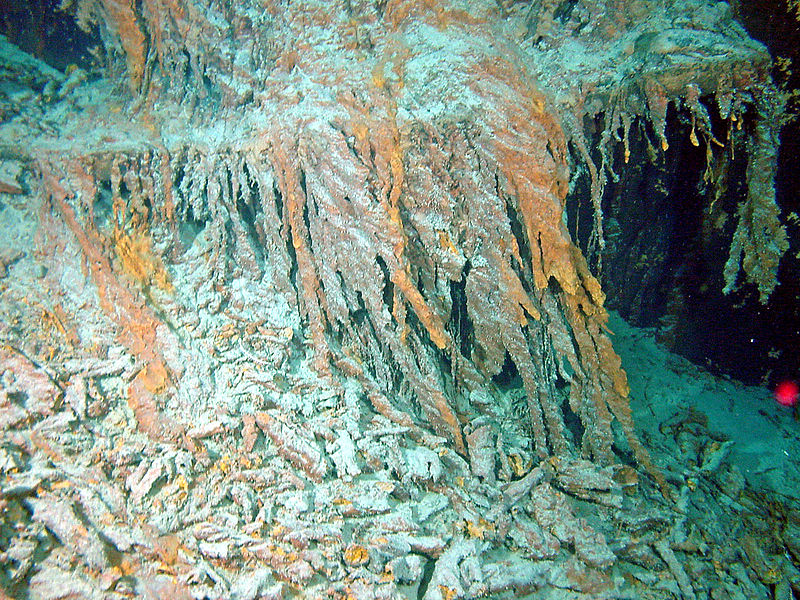
The silk comes at you in waves, brushes up against you and collectively blankets you in the pitch darkness that the light is piercing through. All manner of creature, bacteria, and rust flock to its structure. The microscopic bits of iron and rust that mighty currents of the northern seas have swept away from the craft’s walls can be viewed dancing at the windows. Their delicate clumps of bright red dissolving before your eyes.
Before long your attention turns to the figure slowly coming into focus. The most famous and most haunted of white ladies to slip beneath the grasp of man’s reach and into the blue ocean. Where all who dare tempt for too long the fragile balance of wood, steel, and water eventually dwell. The upright bow of the Titanic bathed in light looks almost like an upscale model in the distance from the sub’s window. Like the familiar sensation of viewing a town or city from the small circular window of an airplane. You know that what you are viewing is not what perspective would have you believe it is, for it is indeed a man-made monster. Sleeping reluctantly in the depths, while the familiarity of its image makes the moment seem a bit contrived.
Then you remember this is a tangible connection to tragedy. A link to so many lives cut short and scattered throughout the wide expanse of the sea. The wreck has become an open house for countless forms of ocean life. Nearly all of the structure’s windows and doors have been eaten away or broken off. This has created constant cross stream currents throughout the ship, exposing its many levels to sand.
The descent down from the surface must have been an incredible sight for any onlooker to witness. The wreck’s debris field bares claim to the massive unleashing of many items as the ship broke in two. An odd mixture of large and small objects in a final battle against gravity and pressure. As it swirled and dipped slowly towards the ocean floor. Bowlers, bits of the ship’s double plated bottom, cups, mountains of coal, thousands of eggs, jars of olives, suitcases, the ship’s impressive ice making machine, cases of champagne, the four massive smoke funnels, and the vast assortment of humanity that would remain lost for all time in the depths.
Only a few precious hundred survived that night, even less were brought back home from the coal ships chartered to collect the dead. Those buried in graves throughout Newfoundland, hamlets across southern Ireland, and in marbled tombs in upstate New York. They were among the only ones to be reclaimed from the sea. The rest had long been consumed by the forces of nature.
Shoes are the only items that remain today. The chemicals in their leather have preserved them from being consumed. Creating a final lasting marker for the millionaire, the fireman, the baker, and the candle stick maker who on that cold night in April were finally made equal by the great leveler of mortality.
No one at the time of her foundering knew where she rested. Several officers and passengers who survived the actual sinking, would return in the form of ashes to the spot long believed to be the wreck’s location. On the morning after the sinking, an eerie vapor lingered over the spot where the linear slipped below the waves. The first rescue ship saw in the distance thirteen boats, bits of cork floating everywhere, dozens of deck chairs, and only one body. This was where every single expedition undertaken to find the ship would begin their search and it was later discovered to be nearly twenty five miles from the actual location.

So many avoided these waters for years. The northern shipping routes would be moved further south to prevent additional disaster. Many would often describe a feeling of dread at the most humane level, from being in the precious of such a tragic event. Today it is impossible to be there, and not feel overwhelmed. You are surrounded by water, it is inescapable, the horizon is grey blue and the wind is usually rushing at you.
A constant chill is in the air, the sun, covered throughout most of the day by slow moving clouds the size of continents. But, whenever it does shine through, it produces a magnificent glow. The beam of a heavenly light seems to make an effort to penetrate the depths. The lining of the water is bathed in the sunshine. A few precious feet, sometimes will mix the bright sun’s beams with the deep dark of the sea. Never enough to reach the sand covered structure below, but, enough to make the imagination wonder.
They wreck for the first time in eighty five years was lit with giant high powered lights the week before. The salvage company’s two Russian made subs had dropped nearly five sets of these underwater production lights with ultra-long lasting batteries so that the camera crews from Discovery Channel could film the wreck live. The wreck visible in the sub’s tiny windows in the distance, the bow now diminished by the outside influences of the lights. It would be two years before their glow would finally burnt out. Until the sand could brush away the sub garbage that had been scattered by the legions of supply ships from the ocean surface, and the wreck could return to a pitch black ghost town. While the green glow of a sub light became a seldom happening once more. Tourists are no longer permitted to dive the wreck site.
The ground just behind the structure’s broken bow section it littered with shoes. Tiny shoes that could only fit on a child, ones that were only made in the northern reaches of Sweden, and some that were standard White Star Line issue. These remaining bits of humanity are enough to turn my morality away from the childish ventures of my past. Away from any desire to see the wreck with my own eyes, or to see items removed from its halls. Only one desire now remains...
Remembrance is the act of remembering, and the ability to remember
Some very interesting facts about the Titanic
At the time of her launch, the Royal Mail Steamer Titanic was the largest man-made moving object on Earth.
The Titanic cost $7.5 million to build.
The White Star Line's Titanic and her sister ship Olympic were designed to compete with the famous Cunard liners Lusitania and Mauretania.
. More than 15,000 men worked on the ship during its construction in Belfast, Northern Ireland.
The Titanic's wake was so huge that, at its launch, it sucked in another ship and almost caused a collision.
The Titanic featured an onboard swimming pool, a gymnasium, a squash court, and a Turkish bath and two separate libraries - one for first-class passengers, and one for second class.
The top speed of the Titanic was 23 knots (more than 26 miles per hour).
The Titanic originally was designed to carry 64 lifeboats. To save from cluttering decks, the ship ended up carrying 20 on her maiden voyage.
Passenger and fashion writer Edith Rosenbaum cabled her secretary in Paris that she had "a premonition of trouble" about the Titanic. (She survived.)
Governess Elizabeth Shutes was so unnerved by the smell of the night air on April 14 that she could not fall asleep. She told fellow passengers that the smell reminded her of the air inside an ice cave she had visited. (She survived.)
William Edward Minahan, a doctor from Fond du Lac, Wis., had his fortune read shortly before the voyage. The fortune teller predicted his death aboard the ship. She was right.
The plot of Morgan Robertson's novel "Futility" bears an uncanny resemblance to the Titanic disaster. The novel tells the story of the Titan, the largest ship ever built, billed as "unsinkable," which strikes an iceberg in April and sinks. In the book, more than half the passengers die in the North Atlantic because of a lifeboat shortage. The book was published 14 years before the Titanic sank.
Capt. Edward G. Crosby, a Milwaukee veteran of the Civil War, founded a steamship company on Lake Michigan but became famous for refusing to put enough lifeboats for all the passengers on his steamers. Aboard the Titanic, he was unable to find a place on a lifeboat, and he sank with the ship.
President Jimmy Carter tribute video
A short tribute video i made about Plains Georgia and their favorite son Jimmy Carter. Made in honor of the new book coming out from Arcadia Publishing "Jimmy Carter In Plains The Presidential Hometown." Written by Robert Buccellato with photos from Eddie Hunter and Charles Plant.
Sunday, August 23, 2015
Jimmy Carter in plains - Boyhood home
James Earl Carter made history from the very beginning by becoming the first American President born in a hospital, the local Wise Sanatorium. His mother, Lillian, worked there as a registered nurse. It was obvious to everyone in the small boom town of Plains that this young man was different. The Carter family was always prosperous. Their farm produced cotton, corn, watermelons, and of course, peanuts.
The Carter boyhood home, two miles west of Plains was, for years, maintained as a working farm. It was still privately owned during Carter’s Presidency. Not opened to the public, it was visible from the road and was frequently a highlight for sightseers.
The Jimmy Carter National Historic site and preservation district was established by an Act of Congress in 1987. The historic site consists of the railroad depot, shown here in the early 1980s, that had fallen into disrepair, the boyhood home, that needed to be purchased, and the Carter compound. The preservation district consists of the historic district and 650 acres of agricultural lands.
As a child, Jimmy (here kicking a football) was free to play with the African American children raised in Archery and Plains. His father, James Earl, was a successful farmer, local public official, and staunch conservative Democrat. His wife Lillian did not share his views on race and was much more liberal on Civil Rights. Many times he would leave the house when she would welcome black guests. Plains remained unchanged throughout the 1930s and 1940s. Jimmy Carter graduated from Annapolis Naval Academy and married Rosalynn Smith. Soon the young couple left Georgia to begin a promising life in the Navy. But, following the untimely death of Jimmy’s father, James Earl Carter Sr. (Pictured below with his wife Lillian), the future President surprisingly gave up his naval commission and returned home to Plains.
Like so many other areas in the country, Plains was ravaged financially by the Great Depression. Black families were particularly affected. Some journalists in 1976 were shocked to witness the level of poverty some African American families were living under and how close their dwellings were to the potential democratic nominee’s residency. There is a mysterious pull to this tiny Hamlet in South Georgia which is hard to explain. It can only be experienced and it continues to be each year by nearly a hundred thousand tourists. They all come for different reasons and purposes. Many come with their children to hear President Carter’s Sunday school lessons, so that they can one day tell their children that they saw an American President. Still many come with a silent longing for simpler times and to experience the rural lifestyle of Carter’s boyhood. So for these reasons and many more, Plains remains America’s hometown.
Whether you are a Carter enthusiast, a researcher, or just curious how a small town influenced a young boy who would become the president of the most powerful nation in the world, odds are you will find a visit to the Jimmy Carter National Historic Site interesting. The history and culture of this rural community can provide a look into why the Carters' ties to Plains, Georgia, have endured the stresses of public life, yet remain as strong as they were decades ago. A visit to the site provides an opportunity to explore the historic resources and rural southern culture that had an influence in molding the character and political policies of Jimmy Carter.
Lincoln's Ghost - Future Project
Harry Truman wrote from the White House, “I sit here in this old house and work on foreign affairs, read reports, and work on speeches — all the while listening to the ghosts walk up and down the hallway... The floors pop and the drapes move back and forth — I can just imagine old Andy and Teddy having an argument over Franklin…” Bess later commented, “Now about those ghosts. I'm sure they're here and I'm not half so alarmed at meeting up with any of them as I am at having to meet the live nuts I have to see every day.”
Today I wrote the first few pages of my fourth book( three is coming out early next year, and two is coming out from Arcadia this Christmas) Lincoln's ghost. It is a complete history of the paranormal history of the presidency and the White House. It is mainly going to be a colorful take on the subjet as one can gather from the image below - the opening line of the book
| The oval office following the death of President Harding, a figure no one has yet come into contact with. |
Jimmy Carter in Plains book - the train depot of plains
There is a historical pull to this place and it’s become manifested in the tiny green and white painted train depot at the center of town. For myself, this humble structure has always held such romantic attachment. This was where Jimmy Carter pulled it off. Where he, along with his neighbors and family staged the most improvable and captivating Presidential campaign in history, forever changing the political landscape of the nation and how we pick our presidential nominees.
Once you enter the depot, long devoid of frequent activity, a single video can be heard echoing throughout the building. It is a video that Charles Plant put together on the 1976 election. The images are old and the voices heard are those that use to fill the television screens in countless homes decades earlier. The nightly news anchors of the past; Cronkite, Harry Reasoner, and John Chancellor, can be heard. The desired effect is easily achieved, transporting visitors back to a time when this depot was packed with locals and campaign workers and primary nights would turn into local vigils and tailgate festivals, as several TVs were installed to witness the results of so many past contests, when their favorite son was trying to achieve the impossible.
. Two rocking chairs, used frequently by America’s First Mother, Lillian Carter, can still be seen. Today, a sign proudly and humorously recounts the fact that “Behind this closed door” is the reason why the depot was selected as the campaign headquarters. It was the location of the only available public bathroom in town. Today the bathroom is closed and visitors are prevented from entering this historic lavatory.
As the election of Jimmy Carter became a real possibility, both the candidate and his hometown started becoming big business. Carter’s wide smile began showing up everywhere in town and souvenir makers had a field day turning the town into a household name nationwide. Some, like the N.G. Slater campaign buttons were of high quality, while others were simply made by an endless series of small entrepreneurs looking for an easy buck. Eventually, the massive level of outside guests began to die down. After the Carter Presidency entered the history books, the town and its famous son both shared in parallel struggles to acclimate themselves to life outside the national spotlight. Plains and Carter both took it upon themselves to help preserve the best elements of the 1976 election and its aftermath for posterity. It was not an easy task for them both. But, President Carter threw himself into the task of turning key structures of his hometown into a national park. With the aid of the residents and outside support, the former president succeeded beyond his wildest hopes.
The town’s train depot was constructed in 1888 and was, for a time, the only building with a public bathroom. This was the primary reason for its selection as the hometown headquarters for the Carter Presidential campaign. It was the site of numerous hometown primary parties and was where candidate Carter would hold interviews whenever in town. As the 1970s dawned, Plains remained largely unchanged. But, following his announcement for president, the entire landscape of the community began to change. The primary night parties would begin at the depot and quickly took on a church potluck atmosphere. There were said to have been rows of flatbed trucks everywhere and tiny campers.
This commemorative T-shirt, owned by Plains resident and Peanut Brigader Ida English. This shirt and other souvenirs were proudly displayed by Jimmy Carter’s supporters to celebrate his victory in the 1976 presidential election. This style of shirt was worn by Peanut Brigaders on the night of Jimmy Carter's Presidential election. It was the idea of Maxime Reese to have these t shirts made and it wasn't until Jimmy Carter won late in the early morning that those on the platform reveled the t shirts. Miss Lillian raised her tired self from her rocking chair on the Platform to reveal her shirt and suddenly fell down. Laughing she soon recovered and the crowd went wild.
The Town in a short period of time had gone from a sleepy community of 600 people into the capital of American political life. While the nation's major cities were spending millions each year to attract new residences to their communities. The town of Plains was getting up to 10 thousand tourists a day and hadn't spend a dime. But, of-course all of that was soon to change.
The inside of the train depot museum during the 1980s. Following 1979 the crowds in Plains began to die down and once Carter lost re-election the community began to turn sleepy once again. There was till tourists, but never like the glory days. Before the National Park Service became actively involved in preserving the town, the depot served as the town’s visitor center. Today it has interactive exhibits and detailed accounts of the 1976 election. But, when this picture was taken, the citizens of Plains relied almost solely on their own personal memorabilia to fill the museum.
The Jimmy Carter National Historic site and preservation district was established by an Act of Congress in 1987. The historic site consists of the railroad depot, shown here in the early 1980s, that had fallen into disrepair, the boyhood home, that needed to be purchased, and the Carter compound. The preservation district consists of the historic district and 650 acres of agricultural lands.
The Depot Museum was designed to retain all the humble charms of its 1970's structure and to also host a grouping of anecdotes from the 1976 election. In the beginning the town could only depend on the relics they themselves still had in their homes and in shops on Main Street. But, then Carter Presidential Collectors began to make very generous donations to the site and the place became one of the most appealing parts of the historic district.
Jimmy Carter In Plains Book Cover
Here it is the cover to the new book on plains Georgia and its favorite son
Out this Christmas.
For many, the physical connections to our presidents have become unreachable; deeply rooted in the past and foreign to us. We can no longer see Washington’s birthplace or William Henry Harrison’s log cabin. Plains, Georgia is different, and the attachment Americans have for it remains truly unique. The book Jimmy Carter in Plains: A Presidential Hometown tells the inspirational story of how one man and his community transformed a nation.
When Jimmy Carter, a one term Governor of Georgia announced his candidacy for President, no one took him seriously. He was publicly nicknamed “Jimmy Who.” Yet, in just two years, he managed to pull off the most spectacular and unprecedented victory in American Political history, winning primary after primary thanks to his effective personal form of politicking and the support of his hometown. Many of his own neighbors campaigned for him in several states, and became the “Peanut Brigade.”
As Carter’s fame grew so did the crowds that started to flock into the tiny sleepy hamlet of Plains, Georgia, making celebrities out of the candidate’s mother, younger brother, and daughter. The exceptional photos of Charles W. Plant guide the reader along the historic moments of the 1976 bicentennial election that made Plains, Georgia America’s Hometown.
It was often proclaimed throughout the 1976 election that “The strength of one man can be measured by the path he takes to travel there.” In the life of our nation’s 39th president, all roads, no matter how elevated, seem connected to one small hamlet in Southern Georgia. No town has ever been so rooted in the life and success of a president.
Tuesday, November 12, 2013
Election night 1976 part 2
Mondale victory. Still despite the air of confidence the group of Carter aids keep running down the list of states that made up the democrat's base, doing and redoing the electoral math over and over again. They had all agreed on a solid base of 214 votes of the 270 needed to put their guy in the oval. They made up a column of states in the north,midwest, and west that they placed in the president's column and then made a group of 170 electoral votes in the toss up grouping.
As the polls closed across the nation Carter began to work the phones. He called every democratic congressional candidate that lost their race that night. Jody Powell would later say it was to show that "someone had to remember the losers, even when everyone else was looking at the winners". He also called supporters to thank them for their service to his campaign. Mayor Daley of Chicago was called, the forecasts coming out of Illinois were mixed at best and Carter wanted a detailed reading on the state's progress. Daley was holding several vote tallies from several democratic strongholds around Chicago, as a backup in case Carter needed a late surge as the night wore on. In the end Daley's efforts were either noble or helpful, and Carter lost the state.
A shift was slowly taking place inside both the White house and the Omni Capital suite, the ford group began to seem like children growing tired of playing a game they kept losing, while the Carter group started to carry a kind of natural and systematic mental shift from cautious optimism to middle uncertainty. They were slowly running out of southern states and Ford's western Second wind was just moments away. Earlier in the evening the Carter aides were letting out cries of joy as the results were called over the television, but now both parties were now prepared for the predicted turn in the candidate's electoral fortunes.
For the first time ever in the history of Televised presidential elections, the results of both the national totals and the state by state count was not placed on giant hand drawn boards. They would instead be projected up on the screen complete with an image of the state and photos of the two major party candidates. The box that would rest beside the anchor would also be complete with the vote total currently in and the projected winner of the state at that given moment.
Each network had their own format and each had it's own system of election analysis hard at work behind the scenes looking over all raw statistical data and projections as it was being handed to them. They all followed roughly the same method of deciding a projected winner. NBC followed two tracking polls, one that was from major precincts from every state that showed a rough but summed up total of a statewide vote, the other covered trends in the voting and was complete with on the ground updates provided by each state.
CBS had three different teams of Statisticians going over the raw election returns from across the country and promptly broke the information into voter categories like age group and race. Turning the data into simple talking points for the on camera talent.
ABC had three decision desks with private computers that gave direct relays to the anchor team at the studio. All sample precinct data was provided to all the networks by the National Election Serivce. Every single member of all three teams had to be in total agreement before any kind of announcement or decision was brought to the anchor's desk.
28 percent of Americans were tuned into John Chancellor and David Brinkley, while ABC and it's team of election night headed by a young Barbara Walters garnered 18 percent of the public attention, while 26 percent choose to tune into either public broadcasting or local news channels for their coverage. But the person who received the biggest share of the audience that night was the most trusted journalist of his day and a man who would become sanomies with some of modern history's most important moments, Walter Cronkite captured 30 percent.
After the opening of election night coverage on all networks and the early calling of Kentucky for Carter and Indiana for Ford. The only other early states called for the President was Nebraska, Connecticut, and Dole's homestate of Kansas. After that a large rundown of states were called for Carter, from the east to nearly all of the south. From Massachusetts, and rhode island, to west virginia and tennessee. North Carolina was called for Carter as was his homestead of Georgia and it's electoral rich neighbor Florida. After that Georgia's left and right neighbors Alabama and South Carolina were also given to Governor Carter. Carter had a clear majority of the African American vote and his massive regional appeal in the south gave him a lock on every single state in the south safe for two that were still too close to call, the states of Virginia and Mississippi.
NBC created for the first time a giant electronic map of the United States that would as it turned out provide a odd imagery contrast from the election of 1976 to current elections was the color each party received when they won a certain state, In future elections the Republican won state would be drawn on the electrol map grid as Red and the Democrat won state would be a royal blue. In 1976 a state would little up as red if it was for Carter and Blue if it was for Ford. Thoughout the evening the president could be heard yelling "go Blue, Go Blue!", maybe the only and last time a Republican presidential candidate would pray for a state to turn Blue.
After the first southern and eastern states that went to Carter, the networks started to dramatically suggest a comeback for the president, that less then an hour later was turned into a political reality on it's electronic map. Every single state in the west turned blue for Ford. All of the Rocky Mountain states from Montana to Colorado and New Mexico. Most of what was leftover from Carter's early victories in the interior lowlands also want to Ford as did every state in the great plains region. Before long the only states now left on the table were the battleground states, the three states that makeup the west coast, and the northern industrial states that both candidates would have to earn a majority of to be named the night's winner.
The six northern states New York,New Jersey,Pennsylvania, Michigan,Illinois,and Ohio had a total of 158 electoral votes between them and roughly half 270 needed to earn a four to eight year stay at pennsyvania ave. They also along with Texas and Calfornia made up the big eight that both camps had calculationed into their strategists for victory. It was universially agreed at this point that Ford would have to win the lion's share of the big eight to pull off a come from behind Truman style victory.
Ford was solid in Calfornia, and even though it gets called late in the evening, would be a huge victory for the president. Texas was the south and Carter had captured that entire region's imagination, so Texas was all but laminated under Carter's column with the other deep south states from the get go. So Ford was going to have to win four of the six northern states. Michigan was his home state and it was called early for their favorite son, and the president's advisors felt pretty confident about their strength and ad buying ability in the midwestern states, so Illinois was going to be tough but would end up being a Ford Victory also. The President wasn't concerned with Mayor Daley seating on democratic strongholds, he knew that the Republicans were powerhouses in the southern Illinois and could withstand any late night Cartwer surge in voting.
New Jersey was going to be close too, and hard to read because media ad buy in New York from both camps was seeping into Jersey. In the end the president was able to pull off a new jersey win and capture it's 17 electoral college votes by a close 2 percent margin of victory. The race was always going to come down to Ohio and both candidates would need it's 25 electoral votes to win. In Fact on election eve the president and the first lady held their campaign's final rally there in Ohio before going to Michigan for the night. As it would later turn out Ford campaigned in the wrong areas of ohio. He campaigned hard in Columbus, and made a brief stopover at Cininnati. But Columbus provided to be a place that was already safely won by the president, while Cininnati and Cleveland were leaning hard towards Jimmy Carter. Had Ford campaigned in Cleveland the outcome of the election might had been different.
By midnight the networks had slowed down their returns, too many states were close and no one wanted to call anything without total certainty that it was going to it's proper winner. Then at around 12:05 CBS called Oregon for Carter, and then nearly three hours later a very embarrassed Walter Cronkite had to inform the viewing public that the state was being pulled back under the uncertain column. It would eventually go to ford, who won it be a margin of 0.17 percent over Carter.
Hamilton Jordan who had been completely confident at the beginning of the night was now looking at the map of called states and started to panic. He would later claim" When I saw the ten or twelve states that were out, it occurred to me that the thing could slip away from us." Ham Jordan wasn't just being a worried papa looking over the final uncertain moments of a national campaign, he did have good reason to get scared. The first results coming out of Hawaii were bad, and it was not out of the realm of possibility that all the states still undecided would go to the president.
The hotel room at the Omni was starting to get filled with guests. Martin Luther King Sr. was there as was Coretta King. Jordan and Carter went into the master bedroom to work the phones and look over the returns. Caddell was getting reports on the ground from across the country and would brief Carter from time to time. It was Caddell that first informed Carter that he would lose New Jersey and that New York was still a jig zag puzzle of a situation. Carter then personally phoned New York City Mayor Abraham Beame and was reassured by Beame that his big win in Manhattan would be enough to carry the state. Caddell then called Mayor Rizzo of Philadelphia who reported that Carter was 260,000 votes ahead of Ford and would easily win the state.
When Carter heard the news about the margin of Victory in Philadelphia he replied with a smile "Well, he promised me three hundred thousand, but we'll take it". After Pennsylvania was called by the networks, all the major northern states were also finally given official winners. Michigan for Ford and New York for Carter. Illinois and Ohio were still yet to be called. Half an hour after Pennsylvania the networks called Iowa,Arizona,Oklahoma, and Virginia for the President. Virginia would prove to be the only southern state that Carter wouldn't win that evening. The president won it by a narrow margin and both Candidate's were glued to the T.V. sets as the state was being called. After losing Virginia Carter turned to Caddell and said they should certainly think about moving the Mason-Dixon line to North Carolina.
Became that his big win in Manhattan would be enough to carry the state. Caddell then called Mayor Rizzo of Philadelphia who reported that Carter was 260,000 votes ahead of Ford and would easily win the state.
When Carter heard the news about the margin of Victory in Philadelphia he replied with a smile "Well, he promised me three hundred thousand, but we'll take it". After Pennsylvania was called by the networks, all the major northern states were also finally given official winners. Michigan for Ford and New York for Carter. Illinois and Ohio were still yet to be called. Half an hour after Pennsylvania the networks called Iowa,Arizona,Oklahoma, and Virginia for the President. Virginia would prove to be the only southern state that Carter wouldn't win that evening. The president won it by a narrow margin and both Candidate's were glued to the T.V. sets as the state was being called. After losing Virginia Carter turned to Caddell and said they should certainly think about moving the Mason-dixon line to North Carolina.
By 2 a.m. Missouri and Louisiana, were called for Carter, who was feeling very good about all the time and energy the spent getting a late endorsement for Louisiana's governor Edwin Edwards and the campaign stop through New Orleans that had taken place just days earlier. Carter's total was now 261 according to NBC and CBS, and ABC having him at 257. He was in the lead and now only a few votes away from being declared the winner. The networks were divided on what states the democratic nominee would need to win the white house. CBS and NBC claimed that hawaii and Mississippi were unclaimed by any candidate and that Carter would need to win both (a total of 11 electoral votes) to be declared the winner. ABC had projected Carter the winner of Mississippi but noted that he was still going to need a win in Hawaii(4 votes) or Wisconsin(11 votes) to go over the top. Either way the democrats were going to have to win 11 points.
Democrats always win in Hawaii, but the first returns looked very bleak for Carter, even though it was considered a sure thing for the Georgian only hours earlier. CBS had reported that Ford was 99 percent ahead of Carter in the nation's 49th state, but it was actually a mistake in reporting. In reality what they meant to say was that 99 percent of the vote was in and it had been Carter's all along. NBC moved Hawaii into the Carter column at around 2:30 A.M. giving him a 265 electoral vote count. He was now just five short of election.
Subscribe to:
Posts (Atom)